
Michael P.’s part of Mechanicsville loses power often enough that he had a routine for it. Wheel the propane generator out of the garage, often in bad weather. Plug it into the interlock Smartwire had installed years earlier. Then, more often than not, watch the power come back a few minutes later.
Michael also travels frequently. When he’s away, he doesn’t want to wonder whether the power has gone out at home, the food is starting to spoil, or something important has gone offline.
He wanted the house to look after itself. Now it does. When the grid drops, a FranklinWH battery picks up the whole home, and the generator has become the backup to the battery.
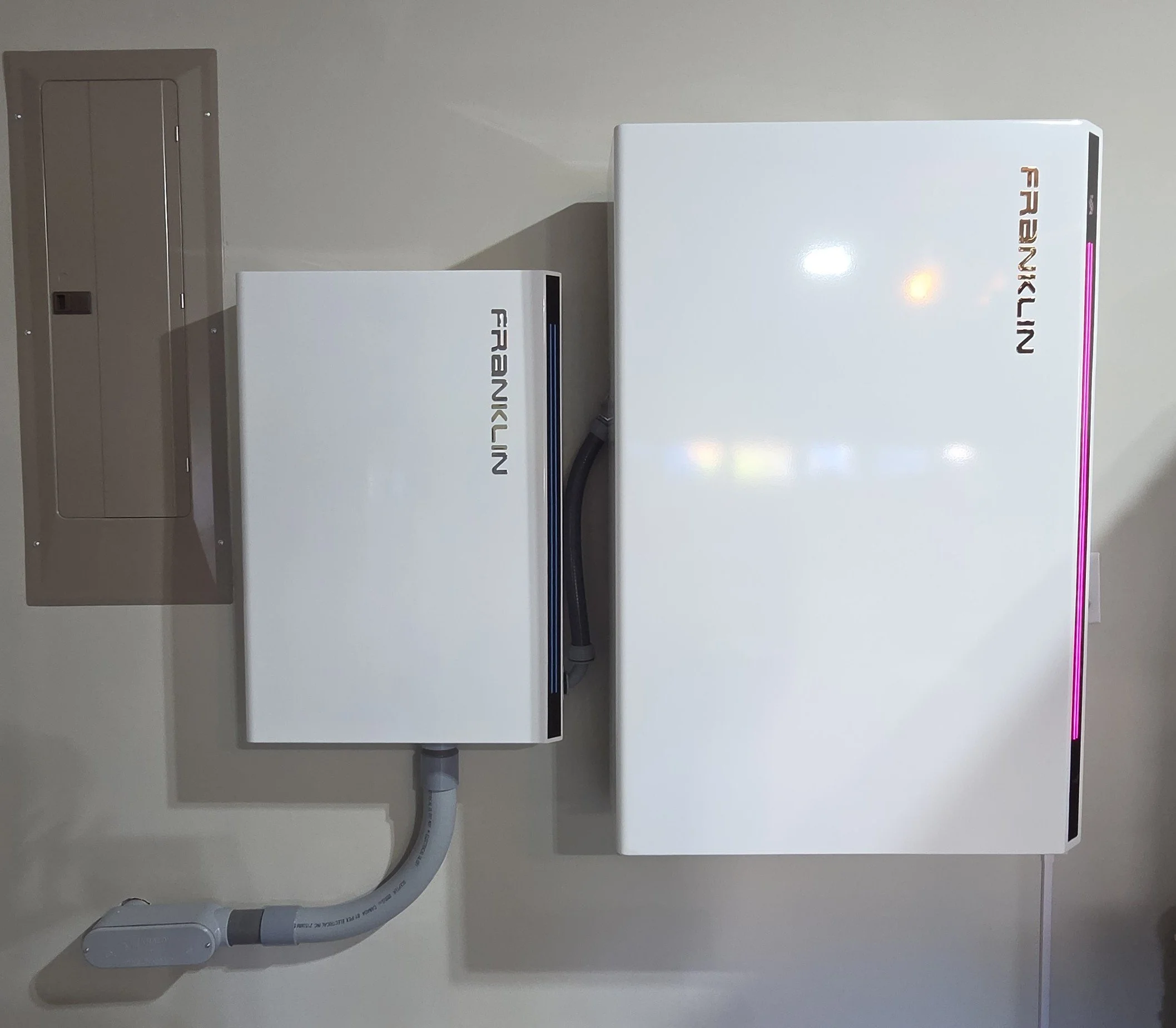
“The entire process from planning to execution was absolutely one of the best (if not the best) contractor project I have ever experienced.” — Michael P., Mechanicsville (Google review)
At a glance
Customer: Michael P., Mechanicsville (Hanover County), Virginia
Goal: Automatic 3–4 hour whole-home backup for frequent outages, generator recharging for long ones, and ready for the solar he plans to add
System: FranklinWH aPower S (15 kWh) with aGate, Smart Circuits Module and Generator Module
Electrical upgrades: New 42-space, 200 A panel with whole-home surge protection; exterior lockable disconnect for the local utility
Approvals: Local utility interconnection approval; Hanover County electrical inspection passed
Timeline: First site visit in August 2026; battery system installed in one day, October 14; inspected October 19
The challenge
Most of Michael’s outages cleared within two or three hours, but they came often and disrupted his many connected devices. His backup was a 13,500-watt portable generator on a 120-gallon propane tank. It could run most of the house, but it struggled to start the older downstairs heat pump, and every outage meant hauling it out and hooking it up by hand.
That delay is the real problem with any generator. A portable unit does nothing until someone moves it into position, connects and starts it, and even an automatic standby generator takes several seconds to start and transfer, long enough for electronics to drop offline and reset. A battery takes over almost instantly, whether or not anyone is home. For a household full of connected devices and an owner who is often away, it was the better answer.
Michael’s goals were clear:
Three to four hours of normal living, with the option to recharge from his generator if an outage ran long.
Ready for solar, which he plans to add in the near future.
Room to grow. His 30-space panel was already full of tandem breakers, with no space for a surge protector, a battery or a future EV charger.
Designing the right system
Bubba Galloway, Smartwire Master Electrician and Project Manager, visited in early August, and we worked from Michael’s actual utility bills: about 48 kWh a day on average, peaking in winter. We sent two proposals, one battery and two. Then Michael came by our shop to walk through every circuit he wanted covered.
Sizing for normal life, with room to stretch. Michael asked for at least three to four hours of normal living, with no changes to how the household uses power. He also knew that when he needs to, he can run the house on about 1 kW, which stretches the same battery to roughly three times as long before the generator ever comes into play.
Typical demand (heat pumps and fridge cycling normally): 3.51 kW average load, 4.3 hours on one battery
Conservation mode: about 1 kW average load, up to about 15 hours on one battery
The aPower S delivers 10 kW continuously on battery alone, nearly three times Michael’s typical demand. When a motor starts, it can briefly deliver 15 kW for up to 10 seconds and 25 kW for one second, and it’s rated to start motors drawing up to 185 locked-rotor amps. That solved the exact problem that used to stall Michael’s generator: the downstairs heat pump kicking on. With the Smart Circuits Module, large appliances like the water heater can be switched off automatically or from the app, so a long outage doesn’t stack enough load to overwhelm the battery.
Choosing the battery with solar in mind. Michael did his own research on the aPower S versus the aPower 2, and we took his questions straight to Franklin’s engineers. The aPower S won on every count. Its built-in solar inverter has four inputs, a natural match for the four roof surfaces that will carry panels, and it still supports microinverters if his solar installer prefers them.
Keeping the generator. We confirmed Michael’s existing generator was compatible. We rewired his generator inlet into a FranklinWH Generator Module, so during a long outage the generator carries the house and puts its surplus into the battery.
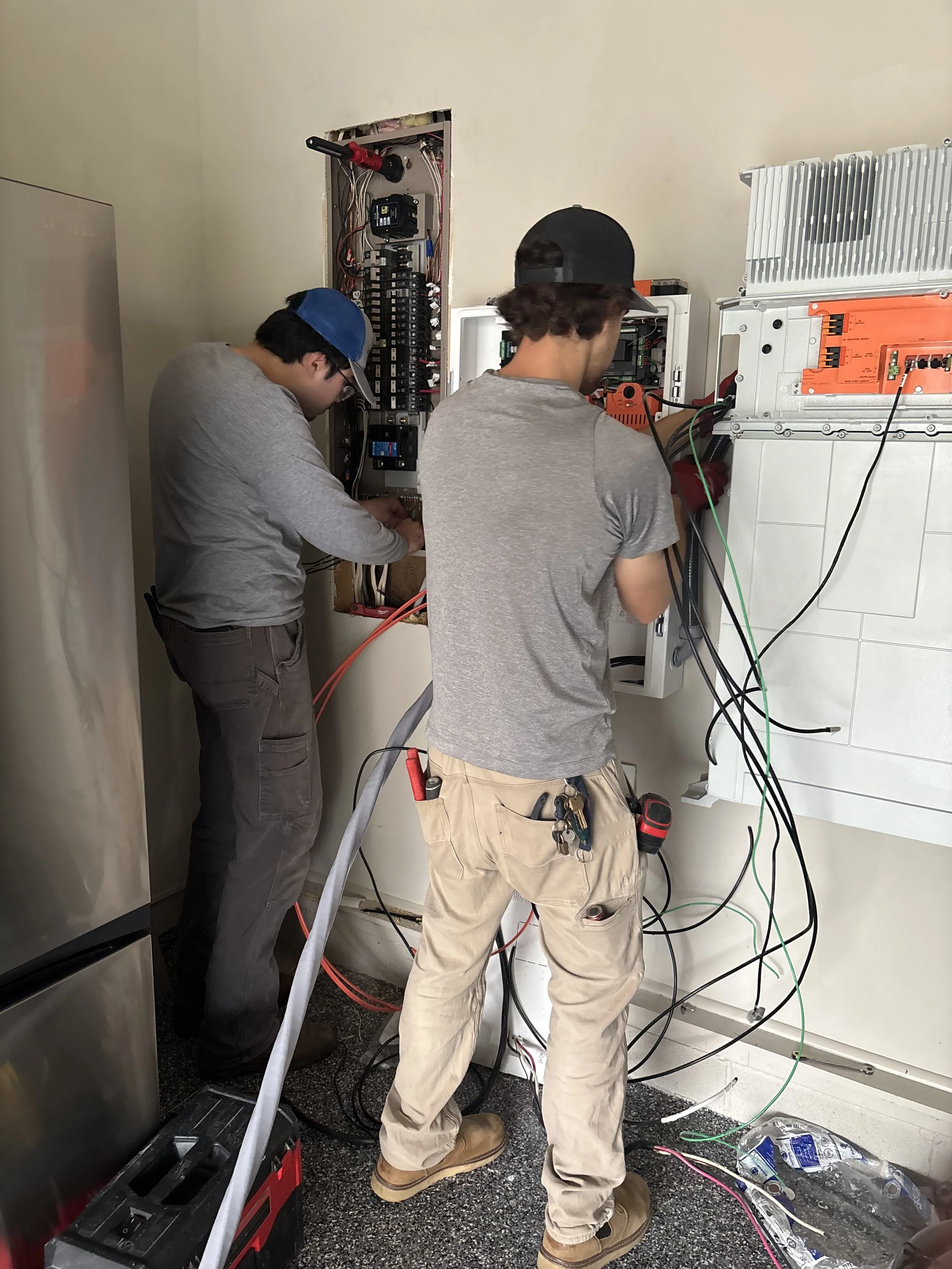
Panel first. We replaced the old 30-space panel with a new 42-space, 200 A panel and whole-home surge protector in September. The new panel had to be in place before the battery could be installed, and it leaves room for solar and an EV charger later.
Approvals and installation
Permits and interconnection. We pulled the Hanover County electrical permit and prepared the full interconnection application, including a single-line diagram, site plan and battery specifications, and filed it in early September.
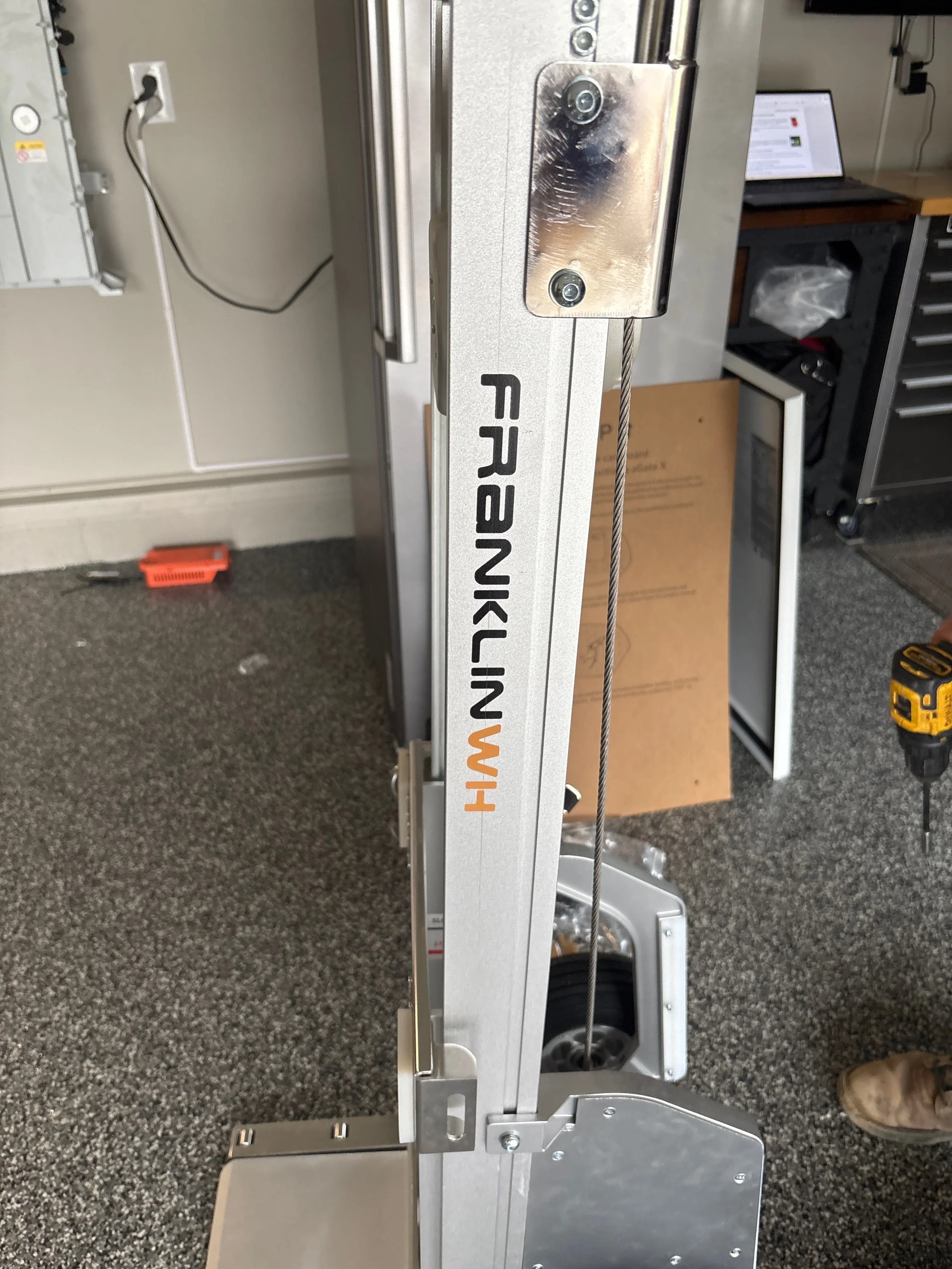
One-day install. We installed the system on October 14. At Michael’s request, the battery is wall-mounted in the garage, up off the floor. The aGate sits beside it, with the optional Smart Circuits Module and Generator Module installed inside, and a lockable disconnect on the outside of the house allows exterior access to isolate the system if necessary.
Inspection and final visit. Hanover County passed the installation on October 19, and our team made a final return visit to test run the generator with Michael.
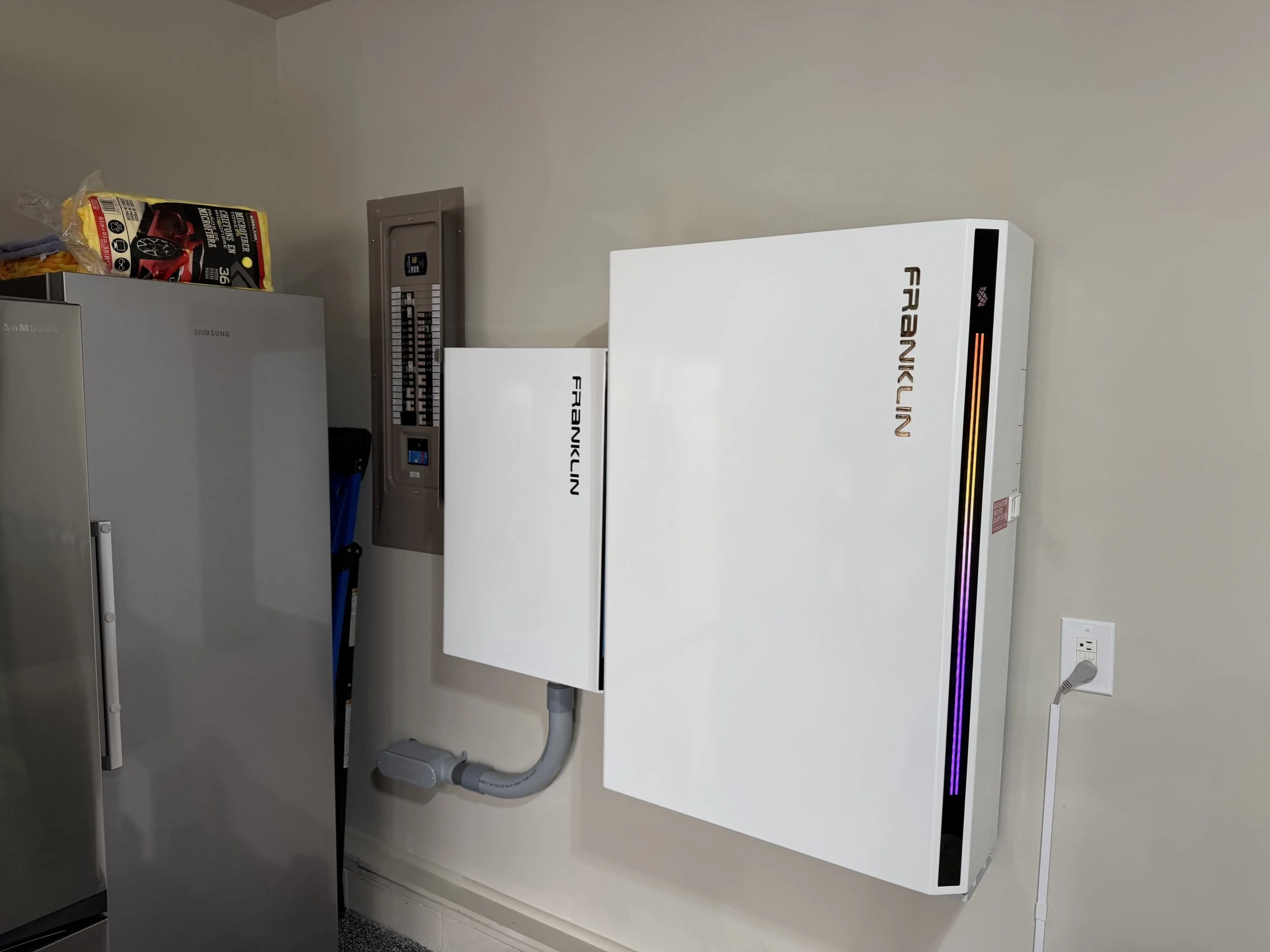
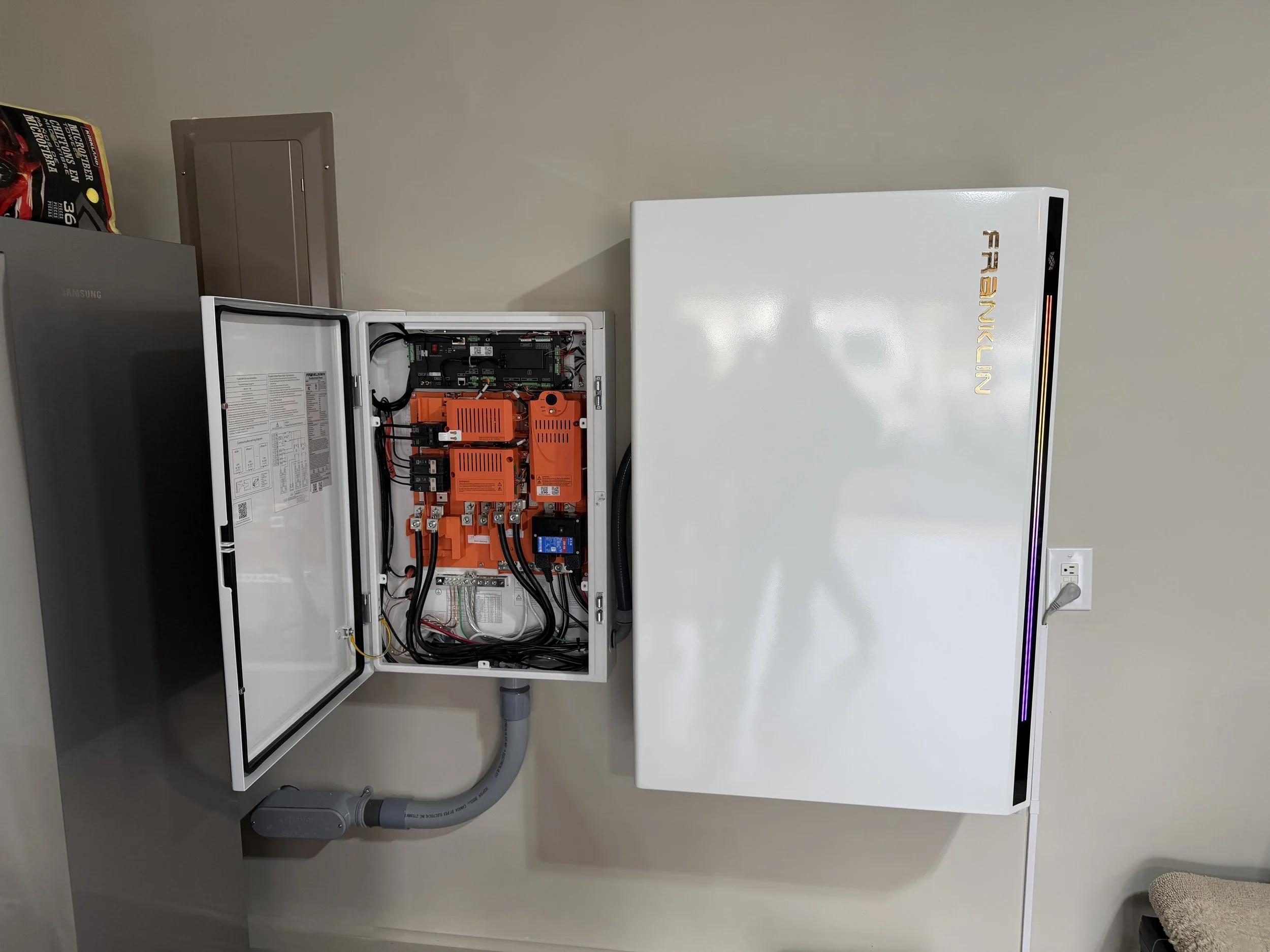
“The electrician teams clearly knew exactly what they were doing and treated the wiring as a work of art!” — Michael P., Mechanicsville (Google review)
The results
Outages handle themselves. When the grid drops, the house keeps running on the battery automatically, whether Michael is home or away. No lugging out the generator and setting it up in inclement weather, no wondering what’s happening at home.
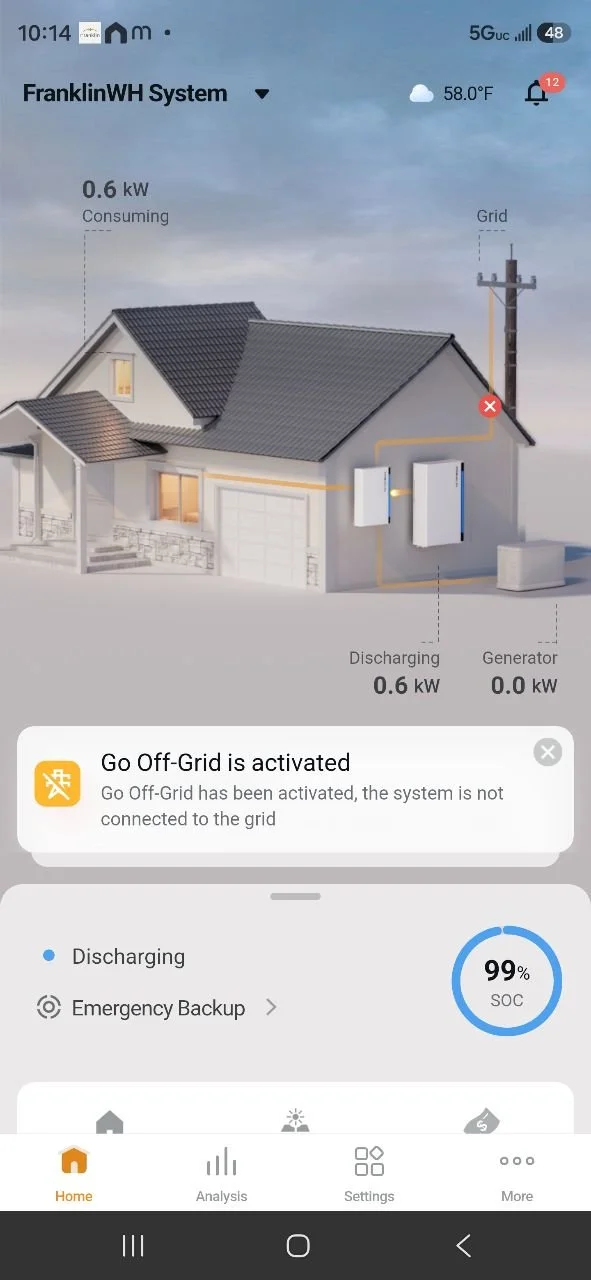
Tested off-grid. In a planned off-grid test, the FranklinWH app showed the home running entirely on the battery, disconnected from the grid, at 99% charge.
A backup for the backup. Tested successfully during our final visit. In a long outage, the propane generator recharges the battery through the Generator Module, and the Smart Circuits Module manages the biggest loads.
Ready for solar, with room to grow. Solar panels can feed straight into the same system, and the new panel has space for an EV charger and whatever comes next.
System details
FranklinWH aPower S: 15 kWh usable; 10 kW continuous on battery alone (11.5 kW with solar); 15 kW peak for 10 seconds, 25 kW for 1 second; 185 A motor-start rating (LRA); built-in solar inverter with four inputs
FranklinWH aGate: Senses an outage and switches the whole home to backup automatically; manages battery, grid, generator and future solar
Smart Circuits Module: Three controllable circuits for automatic load management during long outages
Generator Module: Lets the existing propane generator power the home and recharge the battery
42-space, 200 A panel: Replaced a full 30-space panel; includes whole-home surge protection
Exterior lockable disconnect: Allows exterior access to isolate the system
FranklinWH app: Live view of home usage, battery charge, grid and generator status
In Michael’s words
“I honestly couldn’t have imagined the complexity of this project, yet the teams were so professional and well trained that they made it look easy.”
“The communication from Andrew, Bubba and the several electrical technicians that were involved with the project was flawless.”
“…they have my highest recommendation.” — Michael P., Mechanicsville (Google review)
Thinking about battery backup for your home?
We’ll size a system around how you actually live, and handle the permits, the utility paperwork and the install. Call (804) 746-0035 or request a quote. Smartwire is a FranklinWH Certified Installer and Virginia Class A Electrical Contractor (#2705099603), serving Richmond for 40+ years, BBB Accredited with an A+ rating, and every job carries our 12-month workmanship warranty.